

PARTNER – HENNING
Henning GmbH & Co. KG is a leading German manufacturer in the lift and material-handling sector.
Specialising in load measurement, diagnostics and safety testing, the company designs weighing, analysis and monitoring solutions that combine reliability, accuracy and innovation.

OCTÉ Lift is the official Henning distributor in France and provides lift professionals with a selection of equipment designed to optimise safety, maintenance and lift compliance, in line with European standards.
HENNING PRODUCTS
Our partnership with Henning enables us to offer a complete range of measurement, diagnostic and weighing tools for lift companies and maintenance technicians.
These devices stand out for:
- Proven reliability in real-world conditions
- Accuracy suited to on-site checks
- Ease of use to save time
- Compliance with European safety requirements
Each Henning product helps to improve lift safety and ensures full traceability of measurements, supporting more reliable and effective maintenance.
Pèse charge
Henning weighing systems provide accurate and reliable measurement of car load for all types of lifts.
Their robust design and German manufacturing ensure high durability and excellent measurement stability.
The range is available in different mounting options and performance levels to suit every installation configuration:
- On car frame: direct mounting on the shaft head structure or the frame
- On ropes: individual sensors fitted to each suspension rope
- On fixed points: ring sensors for belts or large-diameter ropes
All models are compatible with Henning control/evaluation units for reliable and repeatable monitoring of loads and rope tension imbalance.

LS (factory pre-calibrated)
Accurate measurement and immediate installation
The LS measuring system measures the total car load using sensors mounted on each traction rope. Each sensor is factory pre-calibrated, ensuring quick commissioning with no manual calibration (no handling of test weights).
LS sensors operate with the Weightwatcher / AE12 evaluation unit. The AE12 evaluation unit centralises the signals for reliable reading and diagnostics.
Key features:
- Suitable for traction ropes Ø 4 to 16 mm
- Complies with EN 81-20
- Operates with the AE12 evaluation unit
Key benefits:
- No test-weight calibration
- Fast installation, plug & play
- Detection of rope tension imbalance
- Long-term stability and accuracy
LS Light (on-site calibration)
Cost-effective solution with simple on-site calibration
The LS Light system follows the same on-rope measurement principle, in a lighter and more accessible version.
Calibration is carried out by placing test weights in the car, using a quick procedure guided by the AE Light unit.
LS Light sensors operate with the Weightwatcher Light / AE12 Light evaluation unit.
Key features:
- Suitable for traction ropes Ø 4 to 13 mm
- Complies with EN 81-20
- Operates with the AE12 Light evaluation unit
Key benefits:
- Simple manual calibration
- Compact sensors
- Fast setup and instant reading
- Cost-effective solution for standard lifts
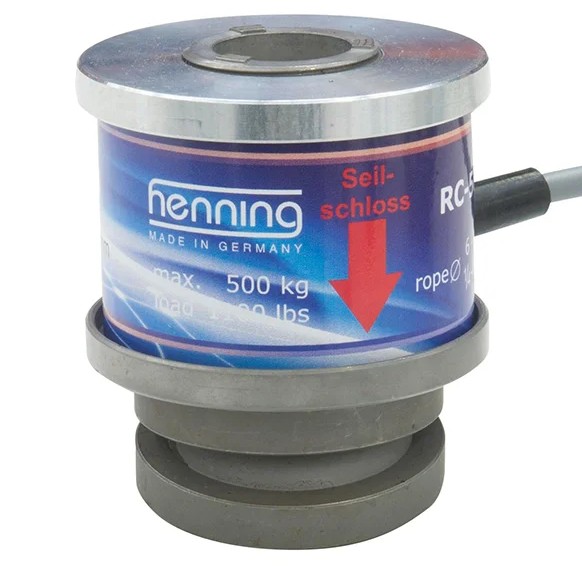
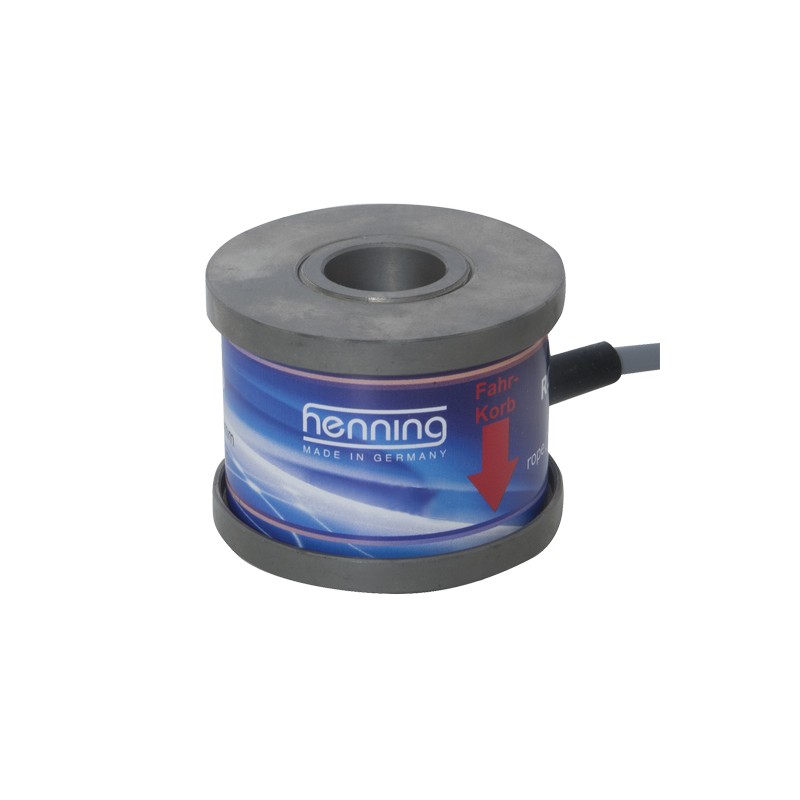
RC donut load sensors – Accurate measurement without calibration, ready to use
Henning RC ring sensors (“donuts”) provide direct, accurate load measurement with no manual calibration (no handling of test weights).
Their plug & play design and circular geometry allow fast installation on any type of lift or lifting platform.
RC sensors operate with the Weightwatcher / AE12 evaluation unit. The AE12 evaluation unit centralises the signals for reliable reading and diagnostics.
Key features:
- Measuring range: 0 to 3500 kg
- Suitable for traction ropes Ø 4 to 25 mm
- Complies with EN 81-20
- Operates with the AE12 evaluation unit
Key benefits:
- No test-weight calibration required (factory pre-calibrated)
- Quick installation during rope replacement
Typical applications:
- Replacement of obsolete weighing systems without complex dismantling
- Lift modernisation without access under the car
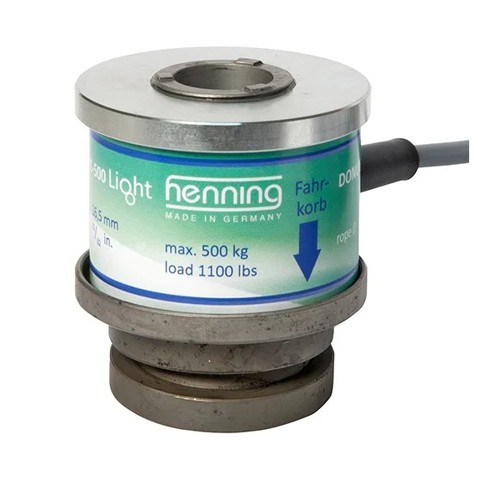
RC Light donut load sensors – Cost-effective solution with simple calibration
RC Light sensors retain the compactness and robustness of the RC series, with test-weight calibration performed on site.
They are a cost-effective alternative for standard or industrial installations.
RC Light sensors operate with the Weightwatcher Light / AE12 Light evaluation unit.
Key features:
- Measuring range: 0 to 3500 kg
- Suitable for traction ropes Ø 4 to 25 mm
- Complies with EN 81-20
- Operates with the AE12 Light evaluation unit
Key benefits:
- Quick installation during rope replacement
- Cost-effective solution for goods lifts and industrial platforms
Typical applications:
- Modernisations requiring reliable measurement at controlled cost
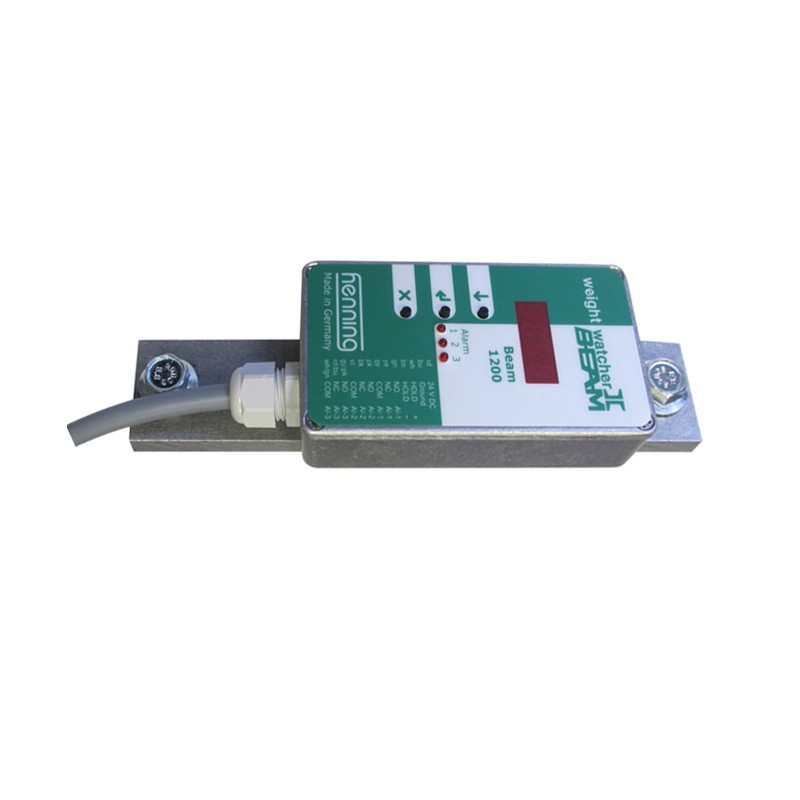
Beam load weighing on bracket: overload sensor (on-site calibration)
The Weightwatcher Beam system is a load sensor designed to be fixed directly on the brackets where installing sensors on ropes is not possible.
Its compact shape and mechanical robustness make it an effective solution for modernisations and installations with limited space.
Key features:
- Typical load range: 0 to 5000 kg
- Complies with EN 81-20
- Integrated evaluation unit
Key benefits:
- Fast installation without major dismantling of the car
- Accurate measurement of car load and overload
- Compatible with closely spaced ropes and low headroom
- Cost-effective, durable solution with no specific maintenance
Thanks to its ease of handling and robust design, the Weightwatcher Beam is a reliable alternative for lifts where space is restricted or mounting constraints are high.
Typical applications
- Roped installations
- Shaft heads that are “inaccessible” for on-rope sensors
- Lifts with limited space above the car
- Modernisations requiring installation without heavy intervention
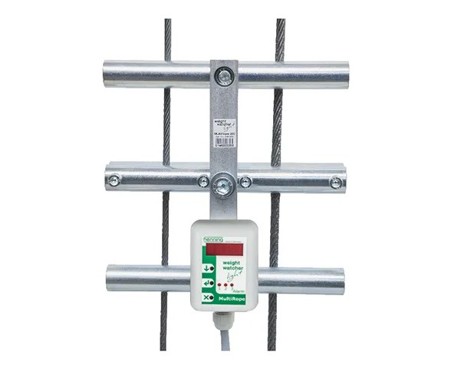
MultiRope (on-site calibration)
The MultiRope system measures car load using a sensor through which the suspension ropes pass. Once the sensor is positioned, the retaining bracket is closed and the clamping screws are adjusted until the rope is in contact with the sensor body, ensuring reliable measurement. The system must be calibrated on site after installation.
Key features:
- Measuring range: 0 to 6000 kg (opt. 10 000 kg)
- Suitable for traction ropes Ø 4 to 26 mm
- Useful width for the traction rope: 300 mm
- Complies with EN 81-20
- Integrated evaluation unit
Key benefits:
- Simple and quick installation, with no complex mechanical adaptation
- Lower cost thanks to centralised mounting
- Accurate and stable overload measurement
- Complies with EN 81
Mobile weighing
Mobile weighing and rope tension measurement system
The Henning Mobile Load Measurement system is a fast, accurate and universal solution to measure both car weight and rope tension.
Suitable for all types of lifts — new or existing, with ropes or belts — it provides reliable checks with no dismantling or complex adjustment.
Based on patented Henning technology, each rope is fitted with an individual sensor (LSM) providing accurate, independent tension measurement.
The data is transmitted to the MSM12 unit, which displays each rope tension and the total weight in real time.
An integrated software assistant makes adjustment and balancing easier, ensuring quick commissioning and simplified maintenance.
Typical applications:
-Checking uniform rope tension (prevents premature wear)
- Checking dead loads and balancing car / counterweight before modernisation
- Fast diagnostics during maintenance or compliance work
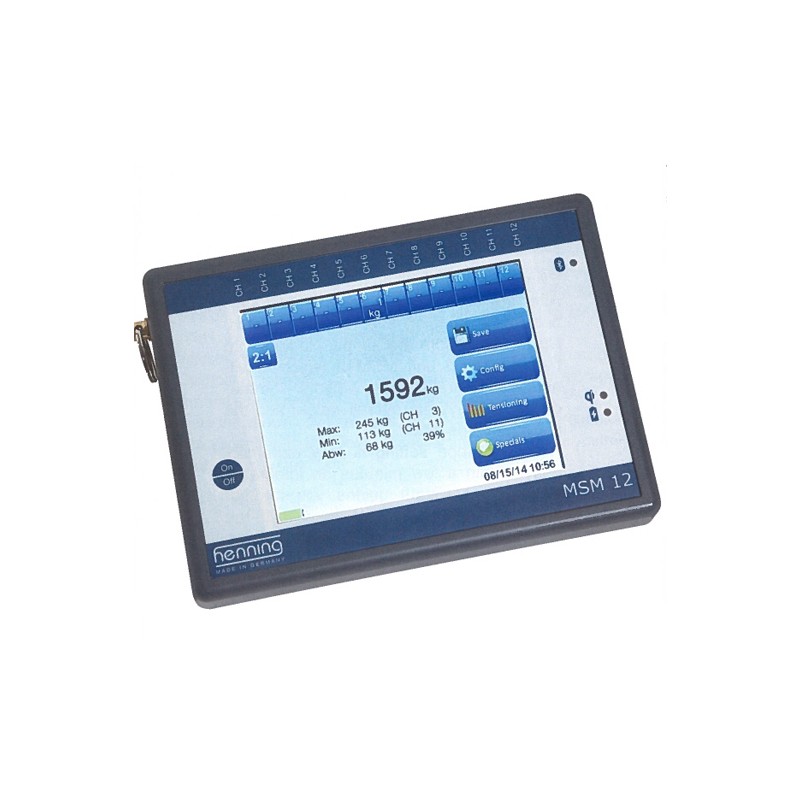
MSM12 – Mobile measurement and analysis unit
Instant reading of rope tension and car weight
The Henning MSM12 unit is the heart of the mobile weighing system.
It collects data from LSM sensors and displays, in real time, each rope’s individual tension as well as the total car load.
Designed for field work, it offers high accuracy and an intuitive interface for maintenance and commissioning operations.
Key features:
- Connection for up to 12 LSM sensors simultaneously
- Direct display of tension and total weight
- Compatibility: LSM1 / LSM2 / LSM XL / LSM Belt
-Compatible with the Henning mobile weighing case
Key benefits:
- Fast and reliable on-site reading
- Simple installation and operation
- Compact, robust housing
- Rechargeable battery operation
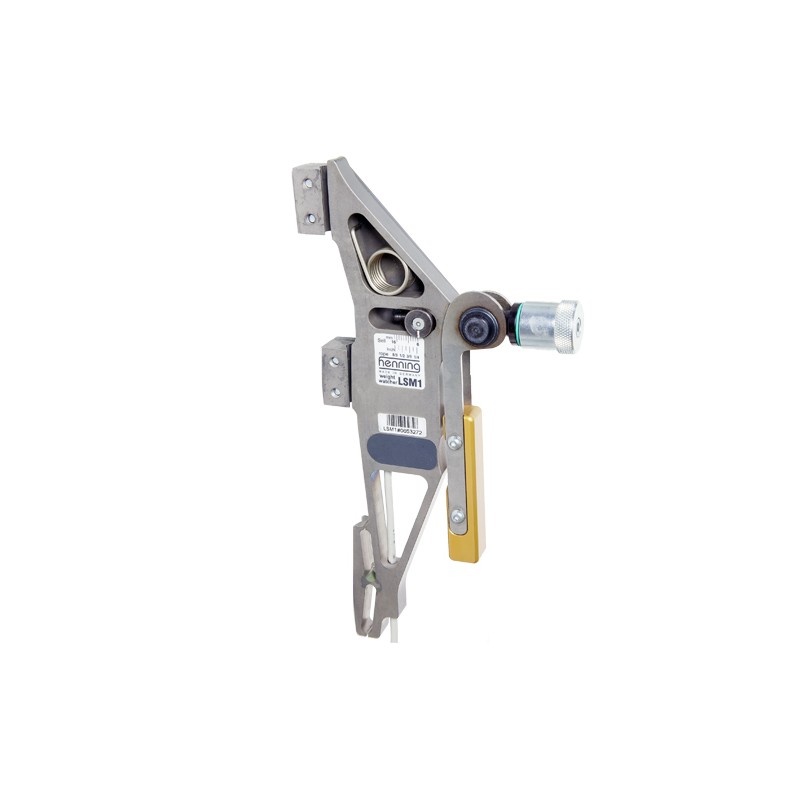
LSM sensors – Load sensors for ropes or belts
Henning LSM load sensors measure the individual tension of each rope or belt.
Based on patented technology, they clamp directly onto the rope with no dismantling and no heavy calibration.
Used with the MSM12 unit, they provide immediate, accurate reading of car weight and tension imbalance between ropes.
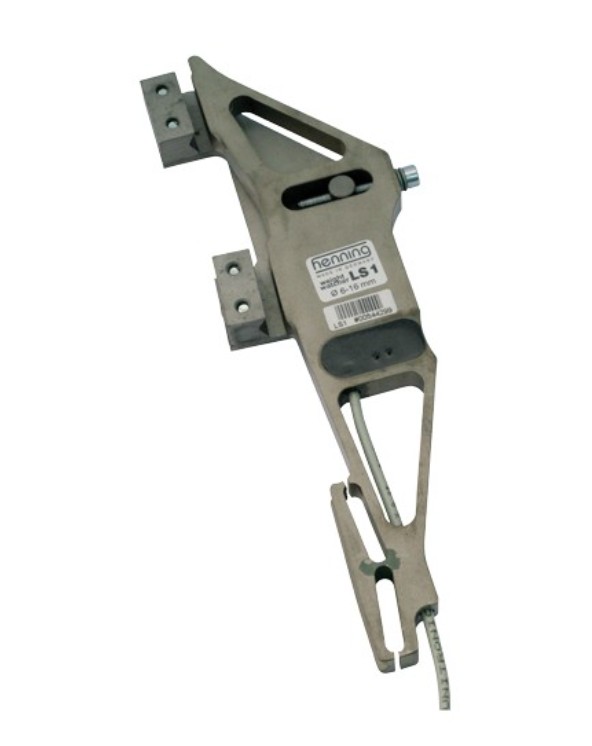
LSM1 – Mobile sensor for ropes Ø 6 to 16 mm
Key features:
- Rope diameter: Ø 6 to 16 mm
- Typical load range: 0 to 500 kg
- Quick mounting with eccentric lever
- Lightweight and robust aluminium structure
- Compatible with MSM12 unit
Key benefits:
- Installation without dismantling the rope
- Accuracy
- No manual calibration required
- No maintenance, portable
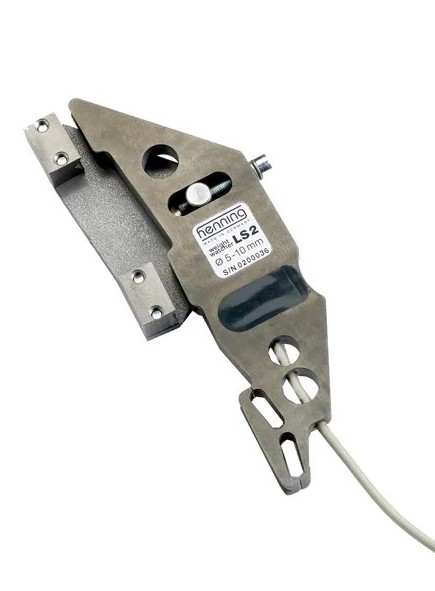
LSM2 – Mobile sensor for small ropes Ø 4 to 10 mm
The LSM2 offers the same features as the LSM1, in a version suited to smaller ropes or small installations.
Key features:
- Rope diameter: Ø 4 to 10 mm
- Compact, accurate design
- MSM12 compatible
- Independent measurement per rope
Key benefits:
- Ideal for residential lifts
- Fast installation
- Measurement without complex calibration
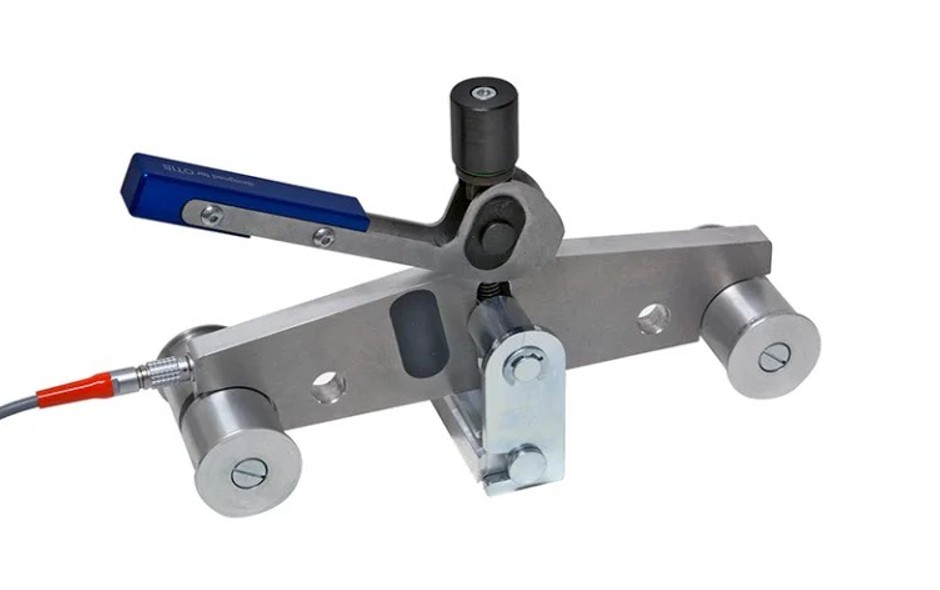
LSM Belt – Mobile sensor for belts
The LSM Belt sensor measures belt tension (e.g. Otis, Schindler, or equivalent systems).
It retains the accuracy and ease of use of the other LSM sensors.
Key features:
- Compatible belt width: 30 to 60 mm
- Compact, ergonomic sensor, quick to position
- Suited to modern belt traction systems
Key benefits:
- Ideal for belt-driven lifts
- Fast tension reading
- MSM12 compatibility
- No complex adjustment
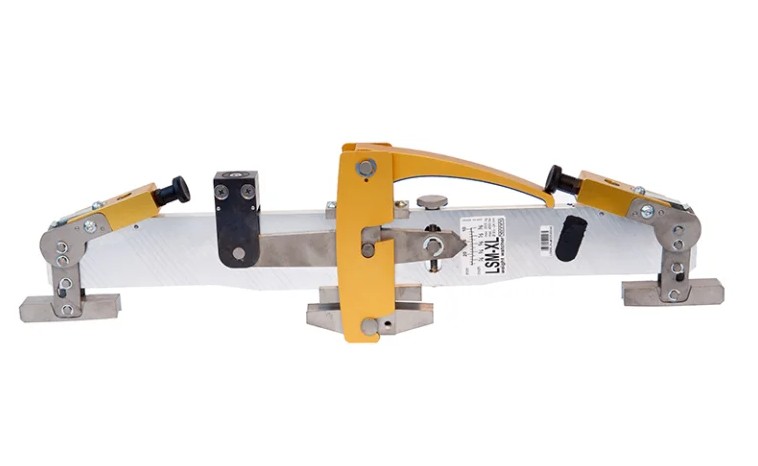
LSM XL – Mobile sensor for large ropes Ø 9.5 to 24 mm
The LSM XL is designed for goods lifts or industrial installations using large-diameter ropes.
Key features:
- Rope diameter: Ø 9.5 to 24 mm
- Extended measuring range
- Reinforced aluminium structure
- MSM12 compatible
Key benefits:
- Reliable measurement on high-capacity ropes
- Simple installation without dismantling
- Ideal tool for heavy-duty lifts
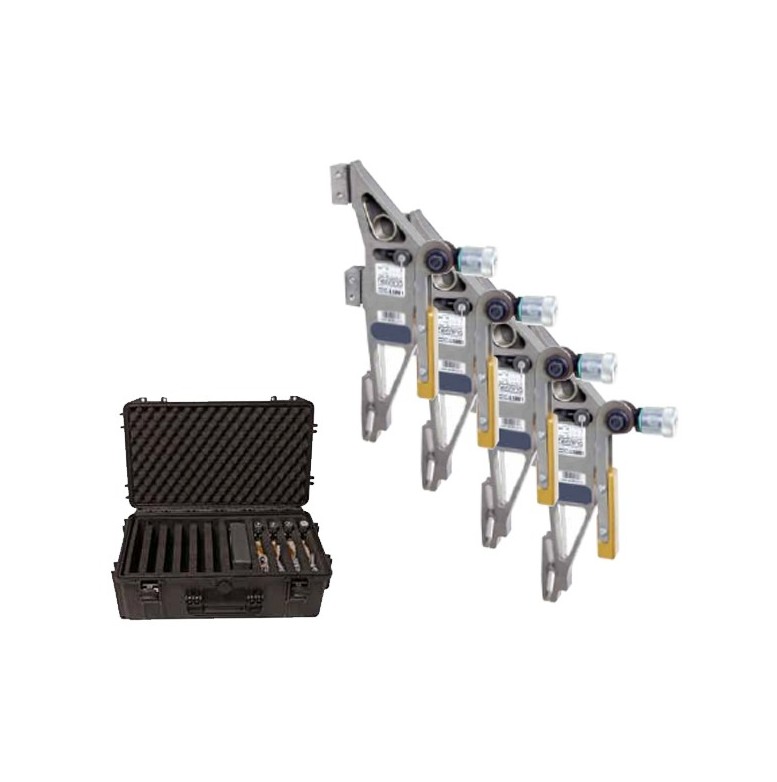
Complete kit for load and rope tension measurement
It allows quick checking of rope tension and car weight, with no dismantling or complex adjustments.
Typical contents:
- 1 × MSM12 measurement unit
- 4 × LSM1 Mobile sensors (Ø 6–16 mm)
- Connection cables and accessories
- Rigid, protected transport case
Key benefits:
- Immediate use, plug & play
-Direct reading of total weight and imbalances
- Compatible with all lift types
- Essential tool for maintenance and compliance work
Henning diagnostic tools
Henning diagnostic tools are designed to analyse lift performance, safety and ride comfort.
They measure operating parameters, check ride quality and verify compliance with major international standards (ISO 18738, GB/T 10058-1997, EN 81).
Henning offers modular, intuitive systems suited to every stage of a lift’s lifecycle: commissioning, maintenance, audit or modernisation.
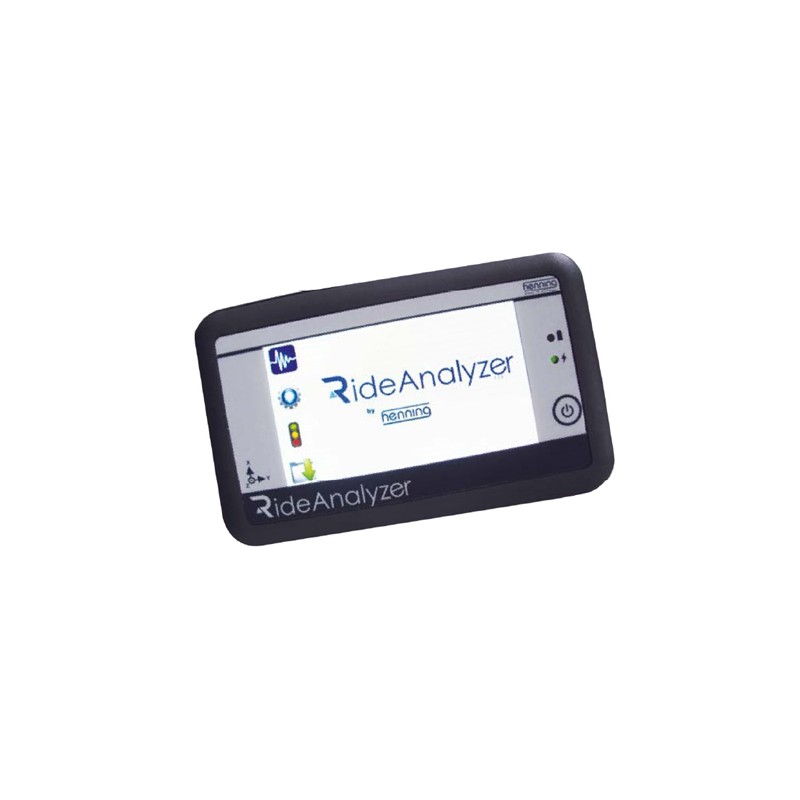
RideAnalyzer – Complete lift ride analysis
The RideAnalyzer is a portable tool that records and analyses lift ride quality (vibrations, speed, noise level).
It operates autonomously, without a computer, and features an integrated microphone for acoustic measurement.
Key benefits:
- Ride quality measurement according to ISO 18738
- Intuitive interface and integrated screen
- Analysis of acceleration, vibration and noise
- Standalone device: no PC required for recording
- Ease of use and full autonomy
- Compatible with traction and hydraulic lifts
Target users:
- Maintenance technicians or quality auditors
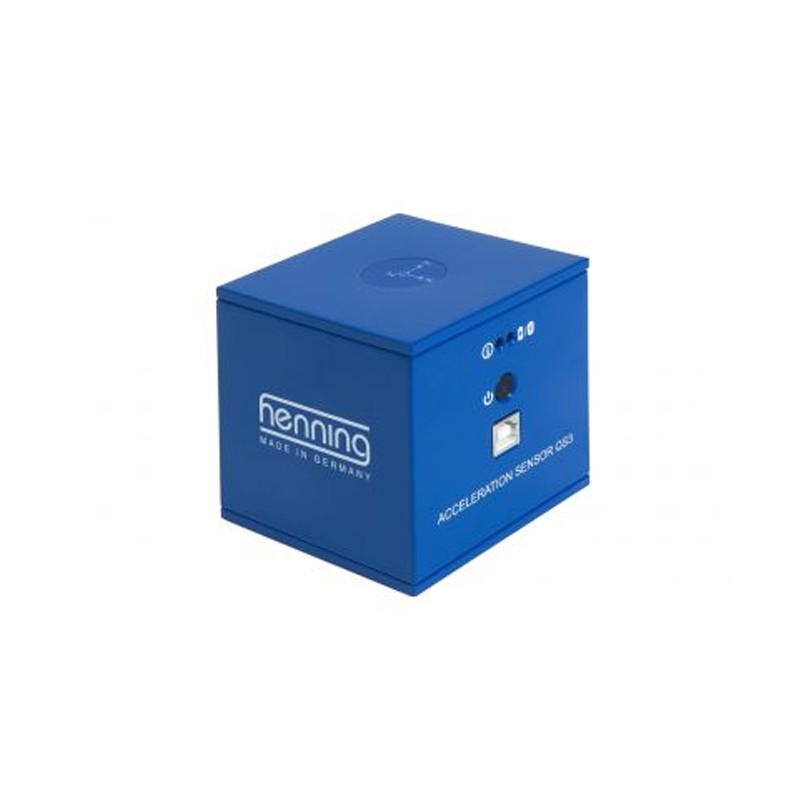
QS3 – Diagnostic mobile de performance et de qualité de course
The LiftPC QS3 system (formerly “Mobile Diagnosis”) is a powerful, modular solution for measuring lift performance and ride quality, compliant with ISO 18738 and GB/T 100581997. It works on traction-rope and hydraulic lifts. The main sensor is the QS 3, a 3-axis accelerometer, factory calibrated.
Key benefits:
- Measurement of acceleration, deceleration and car movement in 3 axes
- Detection of vibration, shocks and irregularities in rails or doors
- Factory calibration of the sensor, ready to use
- Guided software for fast on-site evaluation
- Compatible with traction and hydraulic lifts
- Modularity, accuracy, advanced data exploitation
Target users: technical experts and inspection bodies (advanced analysis)
Henning buffers and bumpers
Henning hydraulic buffers HPL, HPM and LP are high-performance energy absorption systems designed to meet the strict requirements of EN 81-20 and EN 81-50 section 5.5.
They suit all lift configurations, whether passenger lifts, goods lifts or special installations, and can be installed under the car or under the counterweight.
In addition, Henning also offers stored-energy buffers: a non-hydraulic, compact and maintenance-free technology, ideal for certain lift configurations or platforms with space constraints.
Why choose Henning solutions?
- Full compliance with EN 81-20 / EN 81-50
- Universal compatibility: new or modernised lifts
- Installation under the car or counterweight
- Wide choice: hydraulic or stored-energy versions depending on the need
- Maximum reliability for intensive use
- Enhanced safety thanks to proven energy absorption technology
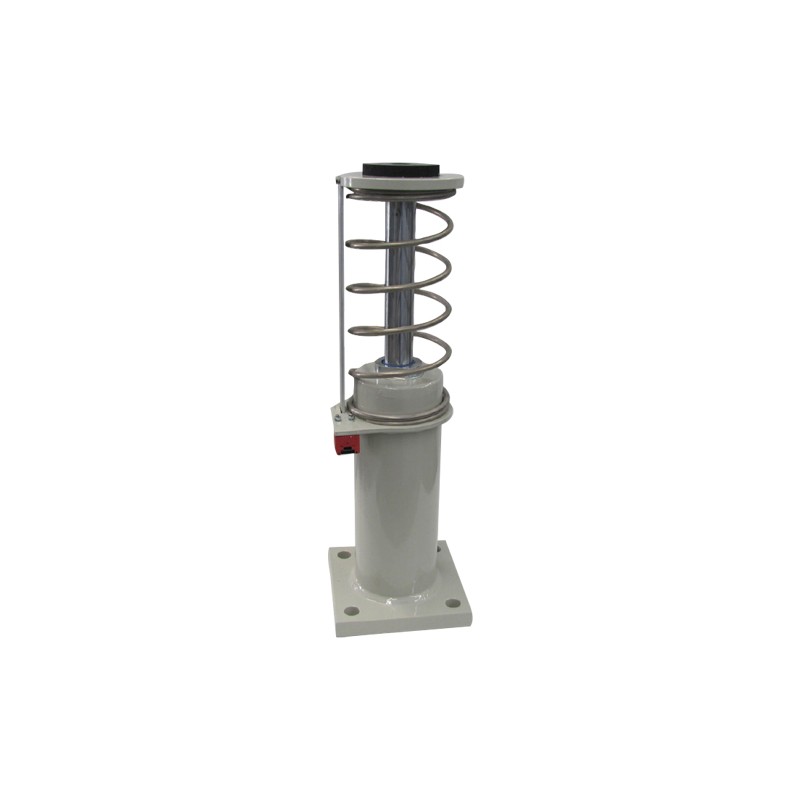
HPL 40 – Standard hydraulic buffers (speed ≤ 1.6 m/s)
Key features:
- Max. nominal speed: 1.6 m/s
- Impact mass: 450 to 3500 kg
Key benefits:
- Compact format
- No adjustment required
- Minimal maintenance
- Complies with EN 81-20 / EN 81-50 section 5.5
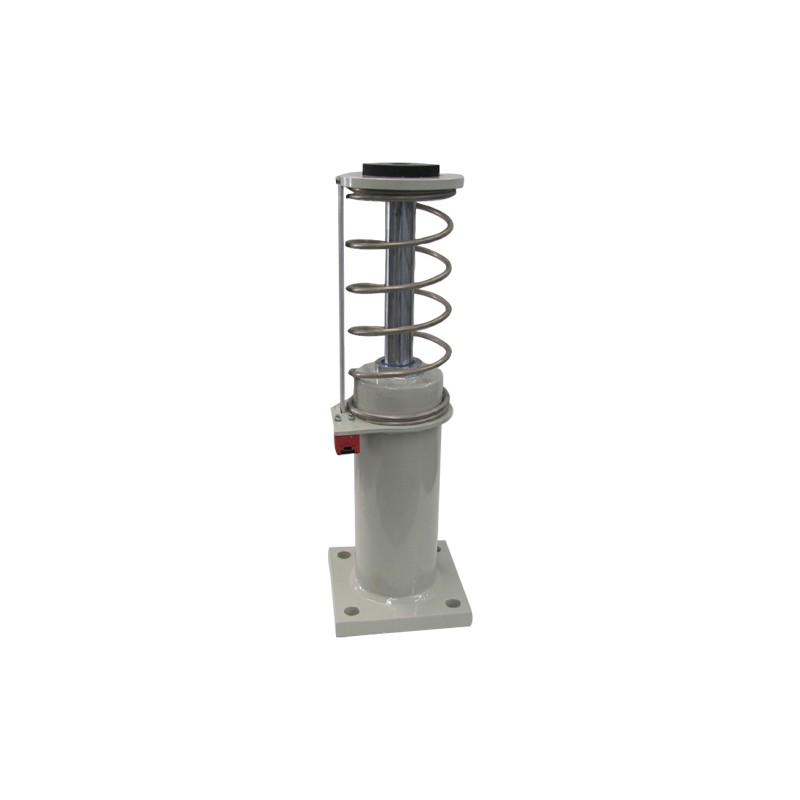
HPM 40 – Heavy-duty hydraulic buffers (speed ≤ 2.5 m/s)
For medium-speed lifts or intensive-duty applications.
Key features:
- Max. nominal speed: 2.5 m/s
- Impact mass: 450 to 3500 kg
Key benefits:
- Reinforced design for higher loads
- No adjustment required
- Minimal maintenance
- Complies with EN 81-20 / EN 81-50 section 5.5
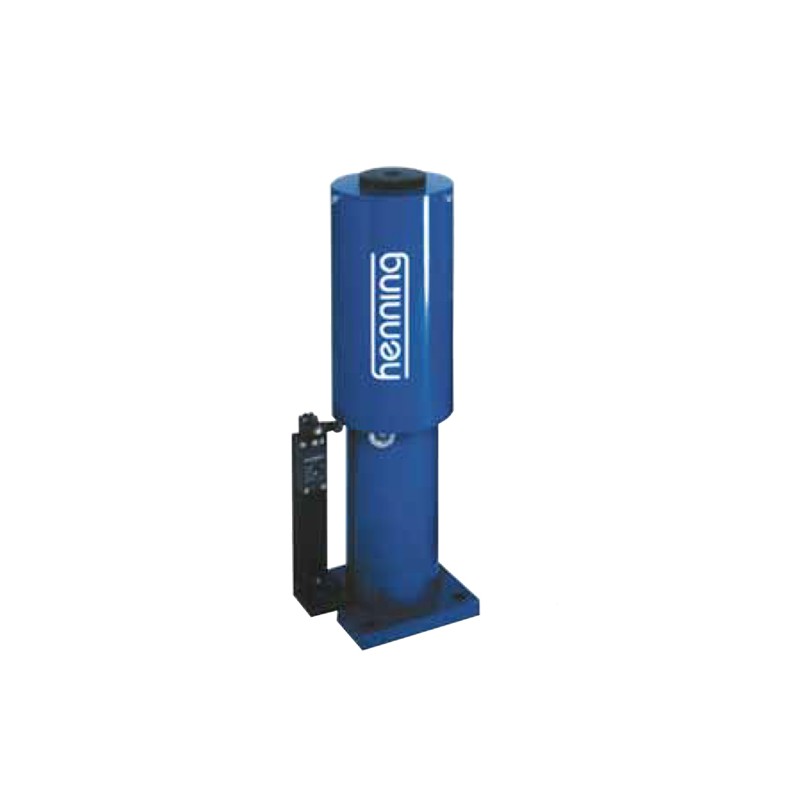
LP 50 – High-performance hydraulic buffers (speed ≤ 5.1 m/s)
Designed for fast or high-load lifts, LP 50 buffers provide maximum energy absorption for demanding installations.
Key features:
Max. nominal speed: 5.1 m/s
Impact mass: 750 to 4500 kg
Key benefits:
- Long stroke
- Robust design for heavy loads
- No adjustment required
- Options available: biodegradable fluid or low-temperature use
- Complies with EN 81-20 / EN 81-50 section 5.5

Buffers for inclined lifts (on request)
Specifically designed for inclined lifts, these buffers provide reliable energy absorption even in non-vertical configurations.
Key features:
Nominal speed up to 3.5 m/s
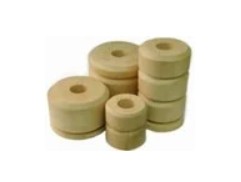
Stored-energy buffers (non-hydraulic)
Compact alternative without hydraulic fluid, with internal springs or elastomer components.
Key features: maintenance-free, reduced overall dimensions, easy installation, stable performance over time.